

In his third film of the Knives Out franchise starring detective Benoit Blanc, writer-director Rian Johnson delivers what is the strongest installment in the series by far. The film is smart, witty, surprising and richly layered with characters stemming from Johnsons own personal experience and views of the church. At it’s core, Wake Up Dead Man is still a murder mystery, but Johnson masters the art of storytelling by transcending the genre’s familiar tropes in service of something much deeper: one’s faith.
In a special screening of the film for Austin Film Festival and while speaking on a few panels, Johnson delves into the experience of making a murder mystery with both familiar and new characters. Dive into what the filmmaker had to say, and our takeaways from the latest in the franchise!
What elevates this film beyond its predecessors is its thematic ambition. Yes, we’re drawn into the standard mystery, but Johnson slightly shifts the focus in the latest film: it’s less about “who did it?” and more about “who are we when we’re doing it?”
During his panel at Austin Film Festival, ‘Reinventing the Classic Whodunnit: A Conversation with Rian Johnson‘ Johnson explained his own struggles with faith as the basis for the characters in the film. He further explained his writing process always starts from a place of empathy – you have to find your way into each character. (Fun fact: he writes mostly in notebooks – around 80% of the script is hand written. Drawings, cross hatches, clean lines, all connecting characters from beginning to end.) With Wake Up Dead Man, these characters are an amalgamation of his own complicated past & present experience with religion. He describes pouring his strong beliefs during his upbringing & formative years, and present-day non-beliefs into different aspects of each character: fragments of his own views of religion all confronting one another within the narrative.
When actors ask specific questions in regards to specific moments or certain scenes, Johnson explains he wants them to “play the dynamics of the scene as they are written on the page”. It’s an approach that clearly pays off, giving clarity to the actors and anchoring their performances.

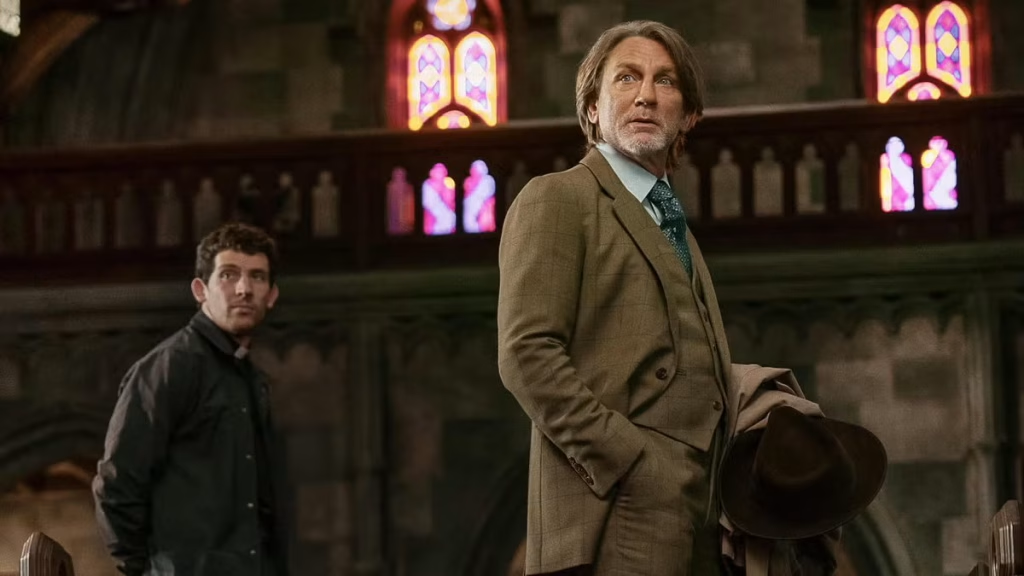
Daniel Craig returns as Blanc (Johnson mentions that famous Benoit Blanc accent is partly inspired by the journalist, Shelby Foot), taking somewhat of a passenger seat this time — he’s still smart, charming and incredibly stylish (a nod to the wardrobe department), but the heart of the narrative is carried by Josh O’Connor’s portrayal of Father Jud Duplenticy, a priest newly arrived to a church in up-state New York who’s grappling with his own calling and contradictions within. Both characters on opposite sides of the spectrum: Blanc’s own agnosticism and Duplenticy’s faith serve as both a moral compass and a source of purpose within the film. Johnson points to this dynamic as a clear example of the contrasting perspectives he’s personally experienced and how their confrontation is resolved: let the characters fight out their convictions and find common ground on the page.
O’Connor gives a marvelous performance, conveying the conflict of someone pledged to faith yet unsure of the faith within him. Opposite him, Josh Brolin inhabits Monsignor Jefferson Wicks: an egocentric figure whose following among his church leans more cult-like than ecclesiastical. Brolin’s menace and charisma (in equal measure), is chilling but memorizing. And then there’s Glenn Close: a tender Martha Delacroix the nun who’s fully devoted to Wicks and the church. She effortlessly becomes the emotional under-current of the film, balancing motherly warmth and cold conviction.
The whodunit mechanics of the film are still present – the twists, the red herrings, the dynamic set of characters that keep you on your toes.

By the general audience consusus, lingering throughout and after the screening, it’s definitely the best in the franchise so far. Johnson’s confidence is palpable, inspiring really. His ensemble cast expertly selected, and the story being familiar enough to satisfy fans of the earlier films and daring enough to feel like a fresh perspective. He takes the genre he’s so good at (and what so many get so wrong) and stretches it – expecting more of his audience and more of himself.
If you’ve enjoyed the earlier films — Knives Out (2019) and Glass Onion: A Knives Out Mystery (2022), this is definitely a must-see.


